 by CEF
The basics
What Stream Delivery does
Stream Delivery is a signal delivery service. You are a content distributor with channels; the operators who carry them are somewhere else, on their own infrastructure. Stream Delivery is how the signal gets from one to the other, and how you keep track of it once it is running.
It is automated, not self-serve. You do not configure endpoints or debug a transport at two in the morning: you make a request, and software developed by CEF, with AI engines, builds the delivery and puts it on air. Our engineers oversee the services, and develop and support the whole system behind them. The result is a fast response and high quality, backed by our 99.9% SLA.
The model
One stream delivered to one operator or hotel is one service.
It lets you scale your business and pay as you go.
Our markets
Top use cases by industry
TV operators
Cable TV, IPTV and OTT operators receive the channels they carry, each delivery recorded on its own.
B2B contribution
Secure Reliable Transport (SRT) to your clients.
Hospitality
A lineup delivered to many properties, each one counted on its own.
Distributors
Your channels reach every operator that carries them, managed from one panel.
How it works
From request to on air
Register the channel and the operator
Add the channel with its origin URL, and the operator that should receive it. Both stay yours: another distributor on the same panel cannot see them, even if they work with the same operator.
Request the signal
Ask for that channel to reach that operator. The request appears as processing, and our automation picks it up.
We build the delivery
Our software builds it and marks it ready. You get an email telling you something changed, never one carrying a URL or a passphrase.
It goes live, and is recorded
The service is stamped active on that date, in your own timezone. Pause and restart it as you need; it keeps its identity and its history throughout.
The panel
Every delivery, on the record
Your channels, your operators and every service you have running, with the date each went live and an append-only log of every change made to it. Services are paused, never deleted, so the history survives. You see only your own: another distributor on the same panel cannot see your channels, and you cannot see theirs.
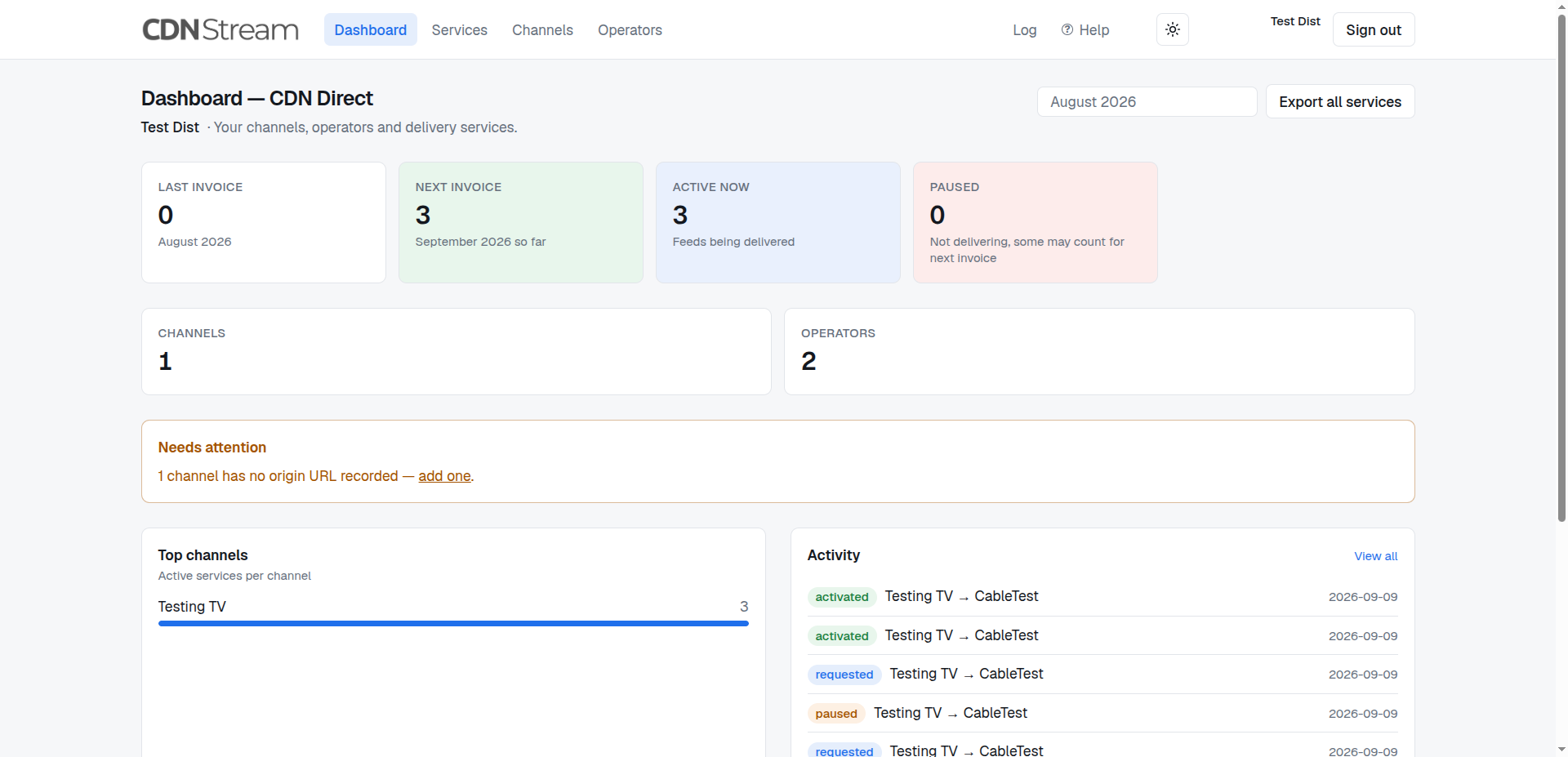
The dashboard
What you will be invoiced for, what is live now, and anything that needs your attention.
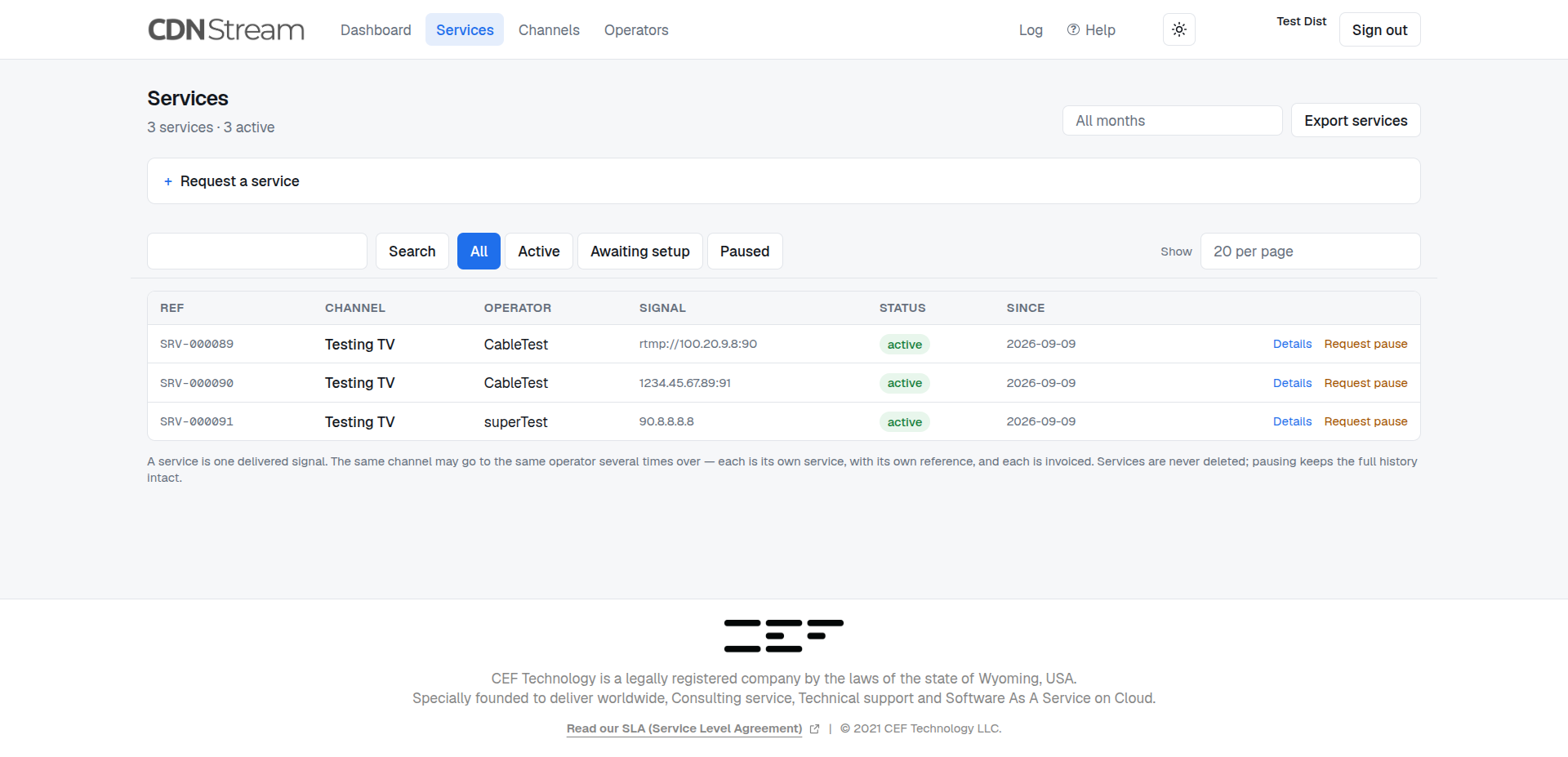
Every delivery, one line each
Each service is one channel to one operator, with its own reference, its status and the date it went live.
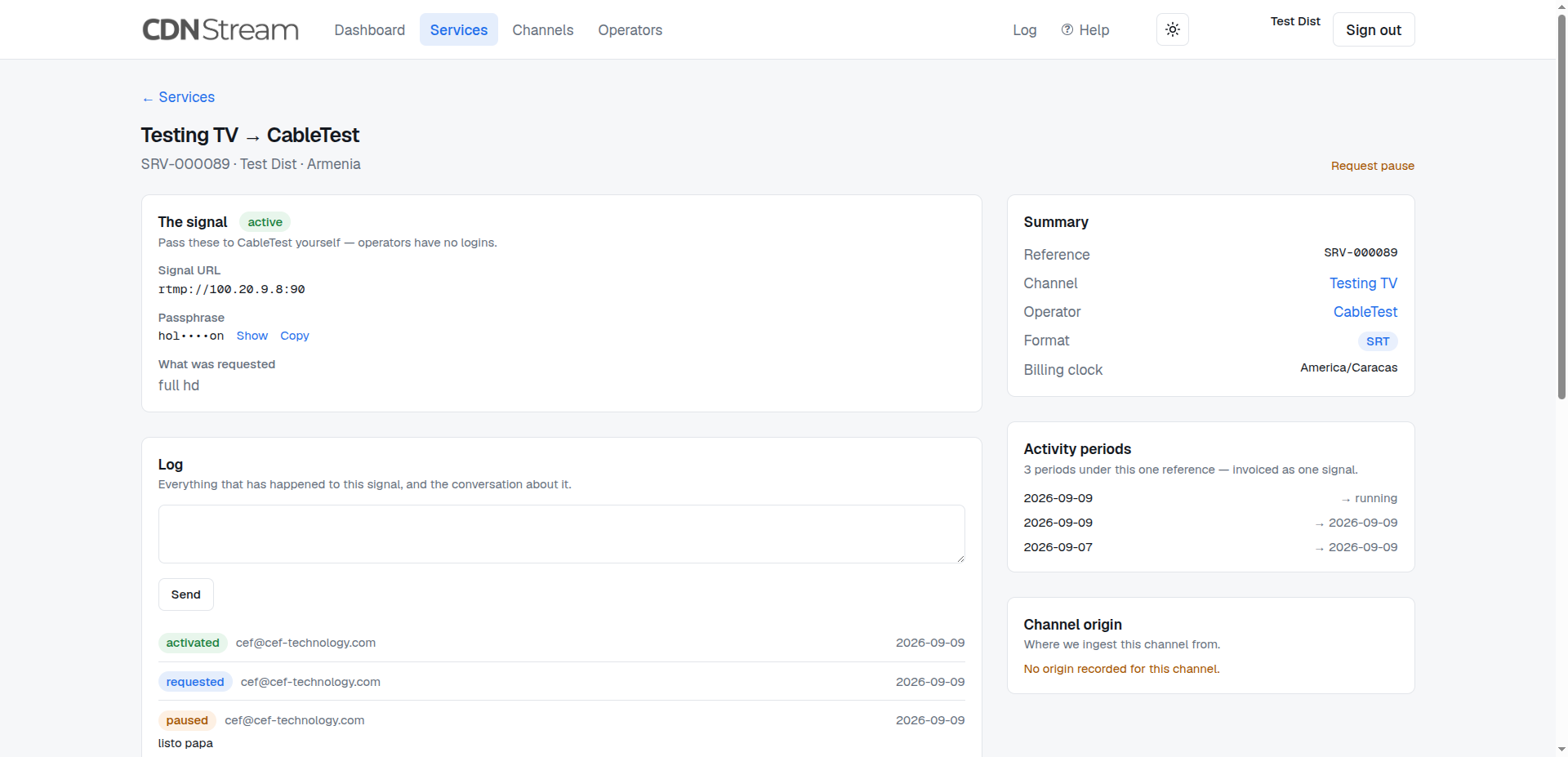
One delivery, in full
The signal details to pass to the operator, the periods it was active, and a log of every change.
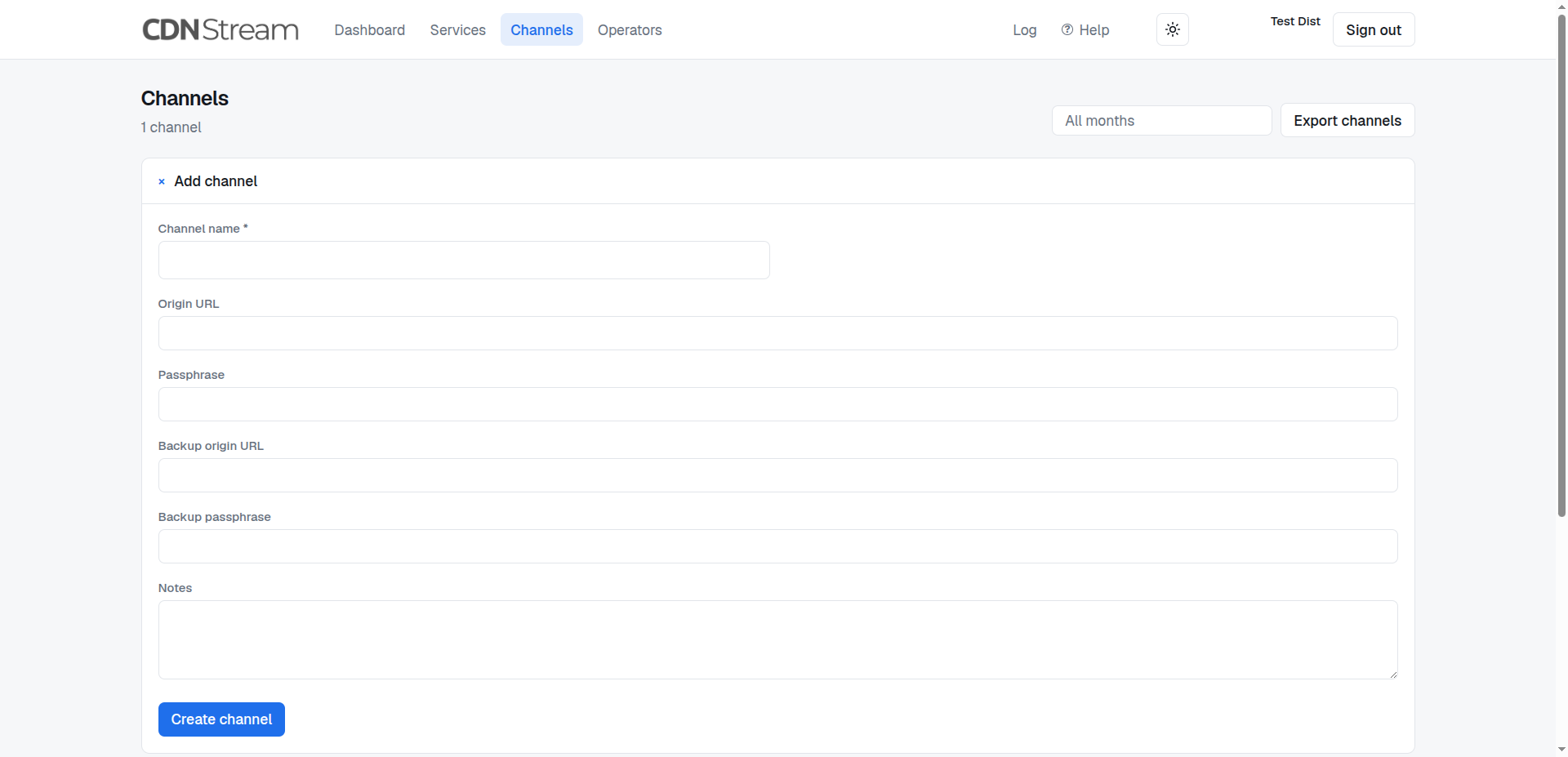
Adding a channel
Record the origin and passphrase once, with a backup origin if you keep one.
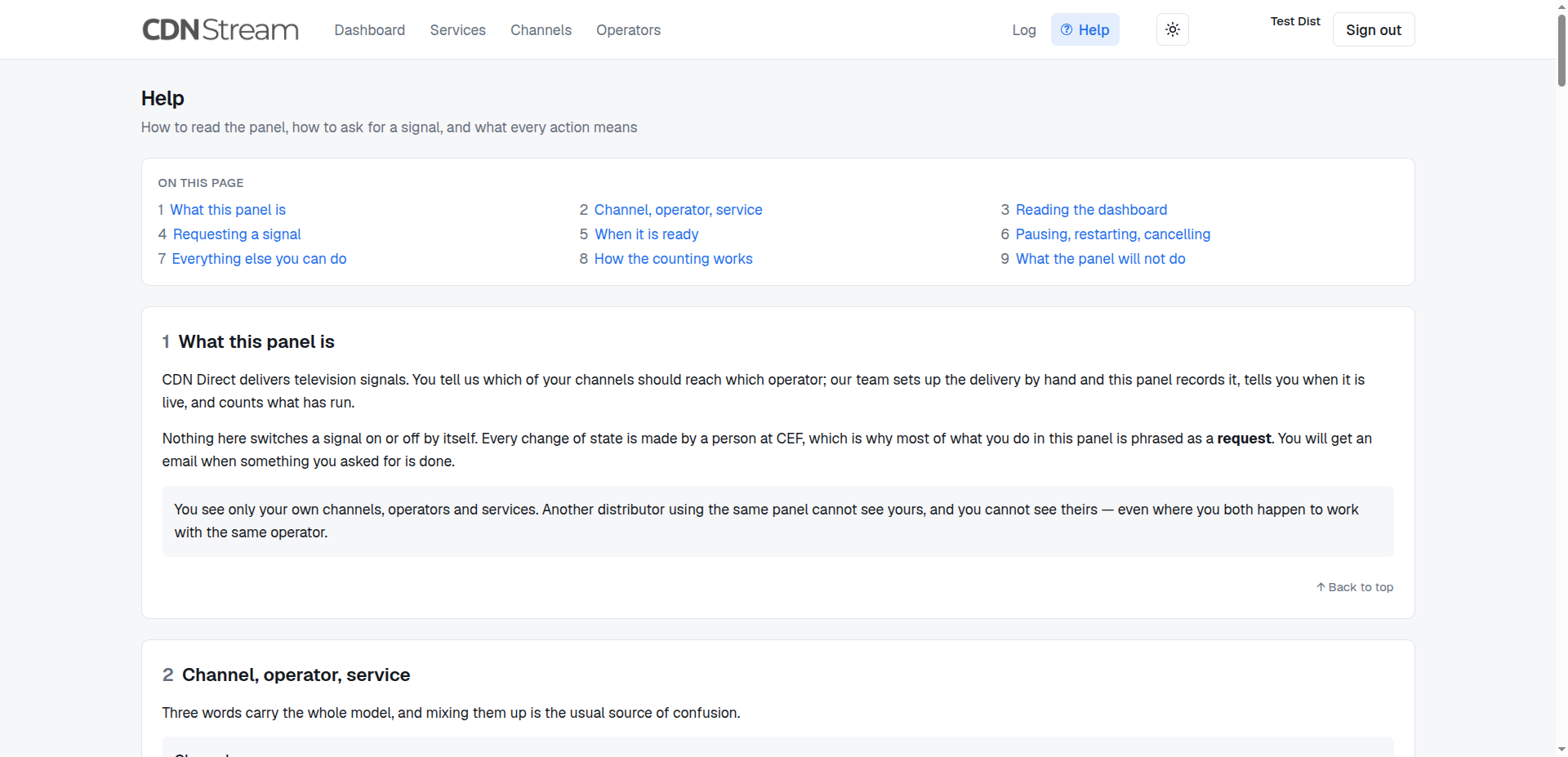
Help, inside the panel
How to read the panel, how to request a signal, and what every action means.
Backed by an SLA
A 99.9% availability commitment, in writing
CEF Technology commits to a minimum Service Availability of 99.9% for each covered service in any calendar month, with service credits below it. It is a published document, not a claim on a marketing page. Read it and hold us to it.
FAQ
Stream Delivery questions
What exactly is a "service"?
One delivered signal: one channel, reaching one operator, on one URL. If you need a second feed to the same operator, that is a second service, recorded and counted on its own. It keeps its identity across pause and restart, so a fault and a restart is one signal, not two.
Which protocols can I give you?
SRT, HLS or RTMP. SRT runs in caller, listener or rendezvous mode, and can carry an encryption passphrase. If your origin is something else, tell us and we will say whether we can take it.
How quickly does a signal go live?
It is fast, but not instant: our automation builds the delivery and puts it on air, after a quick moderation that our team handles from our mobile apps, wherever they are. Your request shows as processing in the panel from the moment you make it, and you get an email the moment it is ready.
Do you fail over to a backup automatically?
Yes, when you give us one. If a channel has a backup origin URL, the system switches to it automatically when the main origin fails. If a signal needs attention, tell us on the service log and it reaches our support team with the whole record attached.
Do the operators get logins?
No, by design. There are no operator accounts. You hold the relationship with your operators; they receive a signal, not a panel to manage.
Is my passphrase safe?
Passphrases are encrypted at rest and shown masked in the panel. No email we send ever carries a URL or a passphrase. When you need to hand a credential to an operator, you reveal it yourself from the service card.